

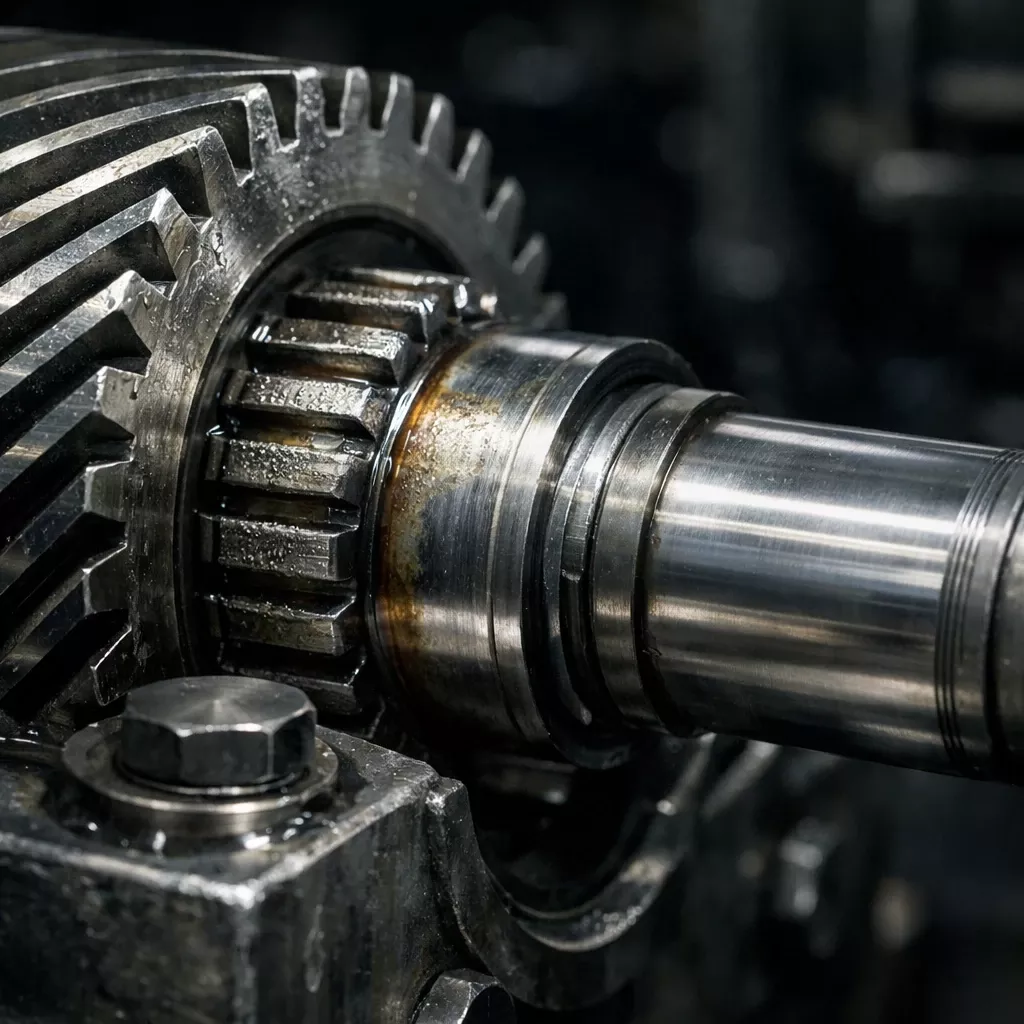
Early Warning Indicators of Drive System Degradation
Introduction
Drive system degradation does not begin with sudden failure; it starts with subtle, progressive changes that precede visible damage by weeks, months, or even years. These early warning indicators often remain undetected because they do not violate alarm thresholds or cause immediate performance loss. In industrial power transmission systems, degradation is a slow transformation of load paths, contact conditions, and material response. Recognizing these early indicators is essential for preventing failure chains rather than reacting to their final outcomes.
Shifts in Load Behavior Rather Than Absolute Overload
One of the earliest signs of degradation is a change in how load is carried, not an increase in total load. Minor variations in torque ripple, cyclic asymmetry, or load reversals alter stress distribution across gears, bearings, and couplings. These changes are often caused by process drift, material variability, or control system adjustments. While average power consumption may remain stable, localized stresses increase, initiating fatigue mechanisms long before overload conditions are apparent.
Progressive Alignment Drift Under Operating Conditions
Static alignment measurements frequently mask dynamic misalignment that develops under real operating loads. As foundations settle, structures flex, and thermal gradients evolve, shaft alignment shifts incrementally during operation. Early degradation manifests as uneven bearing loading, seal wear patterns, and subtle changes in vibration phase rather than amplitude. Because these shifts occur gradually, they are often normalized as acceptable variation, allowing misalignment‑driven damage to accumulate.
Lubrication Film Instability
Lubrication degradation is rarely caused by lubricant contamination alone. Early warning signs emerge when operating conditions prevent stable film formation, particularly in low‑speed or lightly loaded regimes. Microscopic surface distress such as smearing, false brinelling, and micro‑pitting develops while oil analysis results remain within specification. These indicators reflect a mismatch between load, speed, and lubricant behavior rather than a maintenance lapse, a pattern frequently observed in low‑speed, high‑torque drive evaluations documented at SEAWIDE-GEAR.
Subtle Changes in Vibration Character
Early degradation alters vibration signatures qualitatively before it changes them quantitatively. Instead of increased overall vibration levels, systems exhibit changes in modulation, sideband structure, or repeatability. These shifts indicate evolving contact conditions, uneven load sharing, or early crack initiation. Conventional alarm‑based monitoring often overlooks these patterns because absolute thresholds are not exceeded, delaying intervention until damage becomes irreversible.
Thermal Gradient Evolution
Temperature rise alone is a late indicator of degradation. Earlier signals appear as uneven thermal distribution across housings, bearings, and gear meshes. Localized hot spots indicate altered load paths, lubricant starvation, or increased friction at specific interfaces. These gradients develop gradually and may stabilize temporarily, creating the illusion of normal operation while internal damage continues to progress.
Acoustic and Tactile Indicators
Human sensory observations remain valuable early indicators when interpreted correctly. Changes in tonal noise, intermittent clicking, or rhythmic variation in sound often precede measurable vibration changes. Similarly, subtle differences in tactile feedback during inspections, such as increased resistance during shaft rotation or inconsistent backlash feel, reflect internal degradation mechanisms that instruments may not yet capture.
Repetition of Minor Maintenance Findings
Early degradation often announces itself through recurring minor maintenance observations. Repeated seal weepage, consistent fastener loosening, or frequent realignment requirements indicate systemic instability rather than isolated defects. Each occurrence resets the symptom without addressing the underlying degradation driver, allowing damage to progress while maintenance activity increases. These patterns are strong indicators of developing failure chains within the drive system, a phenomenon commonly analyzed in system‑level diagnostics at SEAWIDE-RUBBER.
Condition Monitoring Blind Zones
Certain drive systems degrade without producing strong diagnostic signals, particularly low‑speed, high‑torque applications. In these systems, fatigue damage accumulates under loads insufficient to generate high vibration energy. Early indicators appear instead as operational inconsistency, lubricant distress, or alignment sensitivity. Recognizing these blind zones is critical for interpreting weak signals as meaningful degradation rather than noise.
Conclusion
Early warning indicators of drive system degradation are subtle, systemic, and progressive. They appear as changes in load behavior, alignment stability, lubrication performance, vibration character, thermal distribution, and maintenance patterns rather than as discrete fault events. Organizations that detect and interpret these indicators shift from failure response to degradation management. By focusing on how systems evolve under real operating conditions, rather than waiting for alarms or breakdowns, industrial plants can interrupt failure chains long before damage becomes irreversible.
